

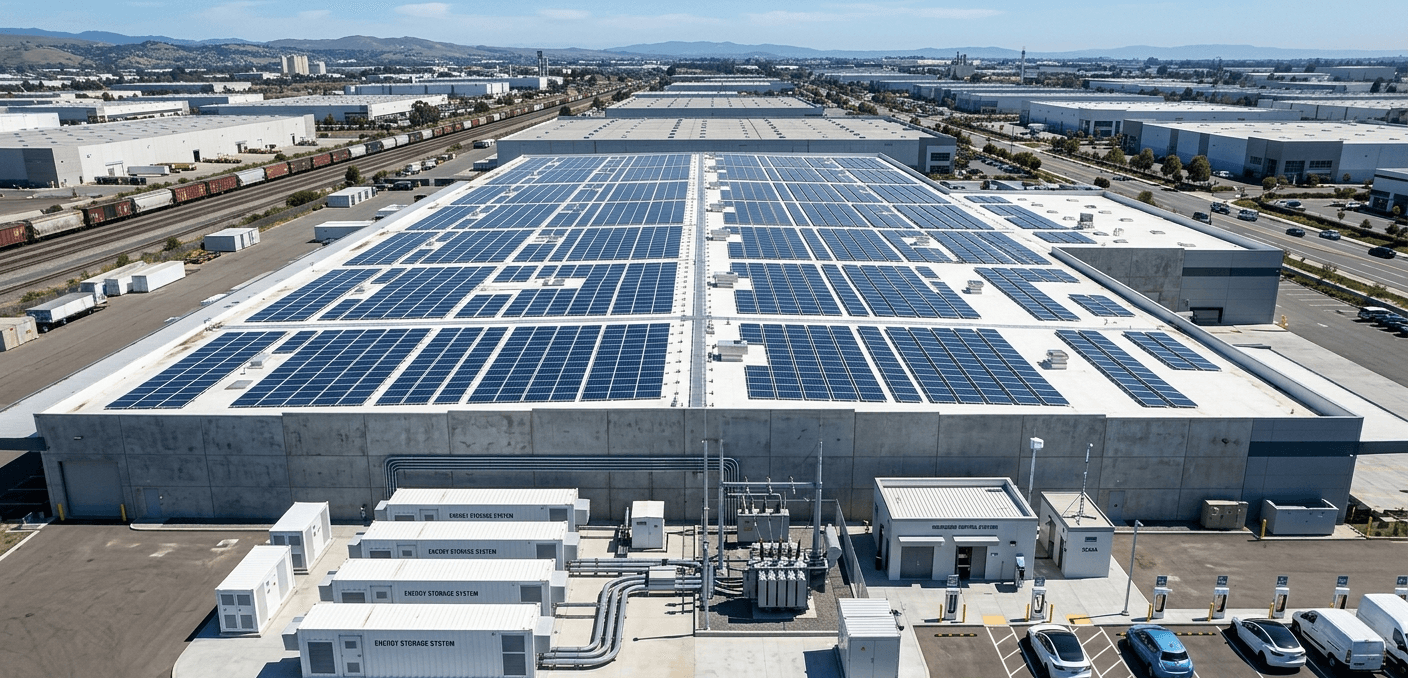
NEEP (Noor Energy & Engineering Plus) has been at the forefront of designing and delivering these integrated solutions across Pakistan, the UAE, and Saudi Arabia. The company’s engineering-led approach ensures that each solar project is not just built, but optimised for real-world conditions, operational resilience, and long-term ROI.
The Challenge: Solar Without Storage or Smart Management
Standalone solar systems often face several operational challenges:
- Intermittent energy production: Solar generation fluctuates with sunlight, creating gaps in supply.
- High peak demand costs: Without storage, businesses rely on grid power during peak hours, raising operational expenses.
- Limited control over energy flows: Uncoordinated systems can overload circuits, reduce efficiency, or leave critical loads unprotected during outages.
- Scalability issues: Traditional setups struggle to accommodate future expansion, EV infrastructure, or additional renewable sources.
These challenges frequently result in underutilised solar assets, increased utility bills, and operational inefficiencies, even when high-quality PV panels are installed.
NEEP’s Integrated Solution
The renewable energy landscape is evolving faster than ever, and businesses are realising that solar panels alone are no longer enough to achieve energy independence, reliability, and cost efficiency. For commercial and industrial projects, the real game-changer lies in integrating energy storage and microgrid systems with solar generation, allowing organisations to optimise energy use, reduce dependency on the grid, and safeguard operations against power interruptions.
NEEP addresses these challenges with engineering-led integration of PV, Battery Energy Storage Systems (BESS), and microgrid controls, creating systems that operate as a single, intelligent network rather than isolated components.
- Advanced BESS Design NEEP engineers BESS systems with load-levelling, predictive charge-discharge algorithms, and thermal management, ensuring maximum battery life and efficiency. These systems store excess solar energy for use during peak demand or outages, reducing reliance on the grid and improving energy cost predictability.
- Microgrid Integration For commercial clients, NEEP designs autonomous microgrids that manage multiple energy sources, including solar, BESS, and backup generators. Microgrid controllers optimise energy dispatch, maintain grid stability, and provide resilience during blackouts. This is particularly critical for manufacturing, logistics, and high-dependency facilities where downtime can translate into substantial losses.
- Future-Ready EV Infrastructure NEEP also integrates EV charging solutions into the energy network, designing both LV and HV distribution, point-of-connection studies, and scalable layouts to accommodate growing fleets. The result is a synergised energy ecosystem, where solar generation, storage, and EV charging work together without overloading circuits or compromising efficiency.
- Turnkey EPC Solution From concept to commissioning, NEEP delivers end-to-end EPC services, including procurement of onshore and offshore products, civil works, mechanical and electrical services, testing, commissioning, and quality assurance. Continuous monitoring during commissioning ensures that the system performs as designed, avoiding underperformance and costly rework.
- Optimised ROI and Improved LCOE By designing systems as integrated networks, NEEP enables businesses to maximise solar utilisation, minimise peak demand costs, and scale easily for future expansions, hence reducing LCOE. Predictive analytics and remote monitoring provide actionable insights, allowing proactive maintenance and operational optimisation.
Real-World Impact
Clients who have implemented NEEP’s integrated solutions report:
- Up to 30% reduction in grid dependency through intelligent energy solutions.
- Higher energy reliability with autonomous microgrid operation during blackouts.
- Optimised energy costs by shifting loads and storing surplus solar production.
- Seamless EV charging integration for fleets, reducing strain on infrastructure and improving operational flexibility.
Conclusion
The future of commercial solar is integrated, intelligent, and scalable. PV panels alone are no longer sufficient; businesses need engineered energy ecosystems that combine solar, storage, microgrid controls, and EV infrastructure. NEEP provides this solution, ensuring that projects deliver maximum energy yield, operational resilience, and measurable financial returns.
By adopting NEEP’s integrated approach, organisations move beyond simple solar compliance or energy generation, they achieve a fully optimised, future-ready energy system that works in real-world conditions and adapts to evolving needs.